Mobility Participant Testimonials
As an institution which has been awarded the Erasmus Charter for Higher Education, the CING supports mobility of students and staff to improve the quality of higher education by encouraging transnational cooperation between universities and contributing to improved transparency and academic recognition of qualifications and studies throughout the European Union.
Students of the CING participate in mobility programmes with partner institutes internationally. Under regulations of the Erasmus Scheme, graduates are entitled to participate in mobility schemes for up to a year after graduation. This provides a plethora of opportunities for our graduates to gain both work experience and skills in an international setting.
The Education Office provides assistance and support to all participants of mobility programmes. Full details can be found on our website
Benefits of Participating in Erasmus mobility:
• Personal, professionall and academic development
• Gain new transferable skills and boost your employability
• Acquire knowledge in new subjects or in teaching methods
• Broaden your horizons – physically and mentally!
• Develop cultural awareness and language skills
• Enhance self-confidence and independence
• Improve and gain language skills
Please note, that at the time of award of the Charter, the name of the CING’s Postgraduate School was “Cyprus School of Molecular Medicine”. As of September 2022, the educational activities have been inducted under the name of the Cyprus Institute of Neurology & Genetics.
|
STAFF MOBILITY |
||||||||
|
INCOMING STAFF |
||||||||
|
|
Name: Dr. Alexandros Ikonomides, MD, BSc, PhD (Lecturer of Medical and Molecular Microbiology) Sending Institution: Democritus Universtity of Thrase Greece Receiving Institution: The Cyprus Institute of Neurology & Genetics, Cyprus School of Molecular Medicine |
|||||||
|
Which factors led to your decision to take part in the ERASMUS mobility scheme? What was the main factor in your choice of the CING/CSMM for your mobility period? What is the impact of your mobility experience at the CING/CSMM on your work (field of research, medical practice, etc)? What have you enjoyed most about your time at the CING & CSMM? In three words how would you describe your experience at the CING/ CSMM to a prospective mobility candidate who may be interested in coming to the CING/CSMM? |
||||||||
|
STUDENT MOBILITY |
||||||||
|
OUTGOING STUDENTS |
||||||||
|
|
Name: Constantia Aristidou, PhD student in Medical Genetics Sending Institution: The Cyprus School of Molecular Medicine Receiving Institution: Department of Cellular and Molecular Medicine University of Copenhagen, Denmark |
|||||||
|
Copenhagen has been ranked for many years as the happiest city in the world. This came as no surprise to me after having the opportunity to visit, as an Erasmus student, this beautiful city; a place filled with colour, life, history and, of course, people with a smile on their face cycling peacefully around the city. |
||||||||
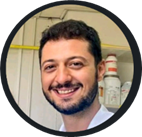 |
Name: George Solomonides, PhD student in Neuroscience Sending Institution: The Cyprus Institute of Neurology & Genetics Receiving Institution: University of Milano, Italy |
|||||||
|
My Erasmus+ experience in the laboratory of Prof. Dr. Poletti in Milan was truly transformative, both scientifically and personally. I had the opportunity to work with human iPSCs differentiated into motor neurons and immortalised neuronal cell lines to study the TDP-43 protein and its pathology, which is a hallmark of motor neuron disease (MND) and other neurodegenerative diseases. Moreover, I experimented with molecular chaperones, proteins able to fold and disaggregate aberrant proteins like TDP-43 as a therapeutic target in MND. Learning advanced techniques such as confocal microscopy, protein analysis, and cellular stress modelling gave me a deeper understanding of the complexity of neurodegeneration research. Beyond the technical skills, what stood out most was the chance to be part of an international research team, exchange ideas during lab meetings and journal clubs, and grow more confident in presenting my own work. This experience not only expanded my scientific knowledge but also strengthened my motivation to continue in neuroscience research. Living in Milan and adapting to a new academic environment also enriched me culturally and personally, making this Erasmus+ period an unforgettable step in my PhD journey. |
||||||||
|
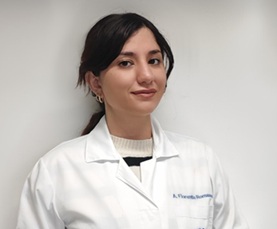
Name: Antri Florentia Romanou , PhD student in Medical Genetics Sending Institution: The Cyprus Institute of Neurology & Genetics Receiving Institution: KU Leuven University, Belgium |
 |
|||||||
|
My name is Antri Florentia Romanou and I am a Medical Genetics PhD candidate at the Molecular Genetics Thalassaemia Department (MGTD) of the Cyprus Institute of Neurology and Genetics (CING), under the supervision of Dr Thessalia Papasavva. My PhD study focuses on the development of a streamlined Preimplantation Genetic Testing approach specifically focusing on monogenic disorders (PGT-M). This approach aims to enhance the efficiency and effectiveness of PGT-M in Cyprus, in preventing the transmission of inherited diseases by simplifying and streamline the procedures involved and addressing various challenges encountered in the procedure. One significant limitation that is commonly encountered in PGT-M is the absence of additional family members making it difficult to determine the disease-related haplotype. Similar challenges arise for couples with De-Novo Mutations (DNMs) detected in one partner or an affected child, but are not inherited from either parent. Therefore, a new method is urgently needed which will allow the detection of polymorphic markers co-inherited with the pathogenic variation without the necessity of involving other family members or having prior knowledge of the inheritance pattern. Long-read amplicon sequencing is a very promising and effective method that has been successfully implemented for PGT-M diagnosis, especially in cases where additional family members are unavailable or where DNMs occur. The purpose of my Erasmus+ mobility to the Constitutional Cytogenetics unit at the Department of Human Genetics, in Leuven, Belgium, was to receive training from experts on Long-Read Sequencing using the ONT MinION platform. Oxford Nanopore Technology (ONT) long read sequencing allows for direct- real time sequencing of single molecules able to reduce the bias. During my placement, I gained valuable theoretical insights and hands-on training in applying ONT sequencing to PGT-M. More specifically, we focused on β-thalassemia and the HBB gene which we used as an example for which we successfully designed and validated an ONT panel capable of simultaneously performing direct and indirect detection of every β-thalassaemia related variation. As a follow-up, we plan to adopt the ONT technology and use this panel to examine, more families at risk of β-thalassaemia in-house. Our long-term vision is to develop customized ONT-based PGT-M panels for couples without available relatives and for those with DNMs, addressing one of the critical gaps in current practice. This Erasmus+ placement formed an integral part of my PhD research. By introducing Oxford Nanopore long-read sequencing in the field of PGT-M for the first time in Cyprus, we aim to enhance the precision and accessibility of genetic testing solutions. Moreover, the mobility program not only enabled the transfer of state-of-the-art knowledge and skills but also fostered valuable scientific collaborations and share this knowledge and experience with other members of the CING. |
||||||||
 |
Name: Stella Angeli Sending Institution: The Cyprus School of Molecular Medicine Receiving Institution: Neuroscience Laboratory, Centre of Biological Sciences, University of Southampton, UK |
|||||||
|
I spent four months on Erasmus + Traineeship at the Centre of Biological Sciences in a Neuroscience laboratory at the University of Southampton in the UK. As a member of the group, I gained the opportunity to practice various experimental procedures and perform Molecular Biology techniques on mouse brain tissue, which I will be performing later on as part of my current PhD project at the CSMM. It was an incredible, educationally enriching period of my life since meeting important people that perform research in the same field, is absolutely inspiring. It was a fantastic experience not only because of the brilliant organisational support from the staff in the department but also because of the great opportunity offered to network and socialise with people. The Erasmus scheme was a highly positive experience simply due to the personal development and maturity that I have undergone. Finally, the realization of achievement fills you with a sense of independence, self-reliance and confidence; you feel ready to overcome new challenges. Without hesitation, I would recommend the Erasmus experience to anyone! |
||||||||
.jpg) |
Name: Grigoris Georgiou Sending Institution: The Cyprus Institute of Neurology & Genetics Receiving Institution: Proteomics Department, Alexander Fleming Institute, Varkiza, Greece |
|||||||
|
During my Erasmus+ mobility at the Alexander Fleming Institute in Varkiza, I had the opportunity to immerse myself in the full workflow of proteomics analysis — from sample preparation and data acquisition to the computational analysis of protein intensities. I also observed cutting-edge techniques in single-cell proteomics, gaining valuable insights into how proteomic data can be processed and interpreted at a cellular level. This experience has significantly enriched my understanding of experimental proteomics and provided me with the essential background knowledge to complement my bioinformatics expertise. The skills I developed during this mobility will be instrumental in my future research, allowing me to perform bioinformatics analyses of proteomics data with a solid understanding of the underlying laboratory and analytical procedures. |
||||||||
|
Name: Elissa Englezou Sending Institution: The Cyprus Institute of Neurology & Genetics Receiving Institution: Medical University of Vienna |
.jpg) |
|||||||
|
My name is Elissa Englezou, and I am a PhD student in the Department of Molecular Virology at The Cyprus Institute of Neurology and Genetics. Through the Erasmus+ program, I completed my placement at the Center for Virology at the Medical University of Vienna. During this period, I was involved in research on virus-mediated HLA-E-restricted immune responses and gained valuable hands-on experience in advanced immunological techniques such as cell culture, flow cytometry, and assays assessing NK cell function and HLA-E expression, as well as EBV variant detection, sequencing, and genetic characterization. This traineeship strengthened my experimental and analytical skills, deepened my understanding of immunological mechanisms, and contributed greatly to my PhD research. I am truly grateful to Erasmus+ for offering me this opportunity to grow as a researcher in an international scientific environment. |
||||||||
.jpg)
|
INCOMING STUDENTS |
||
 |
Name: Sadr Shaheed Sending Institution: The University of Bradford Receiving Institution: Cyprus School of Molecular Medicine, the Cyprus Institute of Neurology & Genetics |
|
|
Some are impressed by the state-of-the-art laboratories, where research is innovative and has a high international impact. Many are captivated by the bearing of the research centre while others interested in its friendly collaborative environment. These features, among CSMM’s great assets, form an image of CING as a centre of Excellence in areas of neurology, genetics and biomedical sciences. I've always enjoyed traveling and having experience with different cultures and different people. Erasmus mobility program gives me an opportunity to travel and learn from own experiences and from the experience of others. I advocate the opinion that Erasmus programme is an excellent opportunity to meet various groups of people, spend quality time with them and get to know their habits, attitudes, and lifestyle. Also, living, studying and having fun with international scholars would broaden your horizons and enable you to build a strong social network with people around world. |
||





0002.jpg)